
7 Mistakes You’re Making with French Mobility Localization (and How to Fix Them)
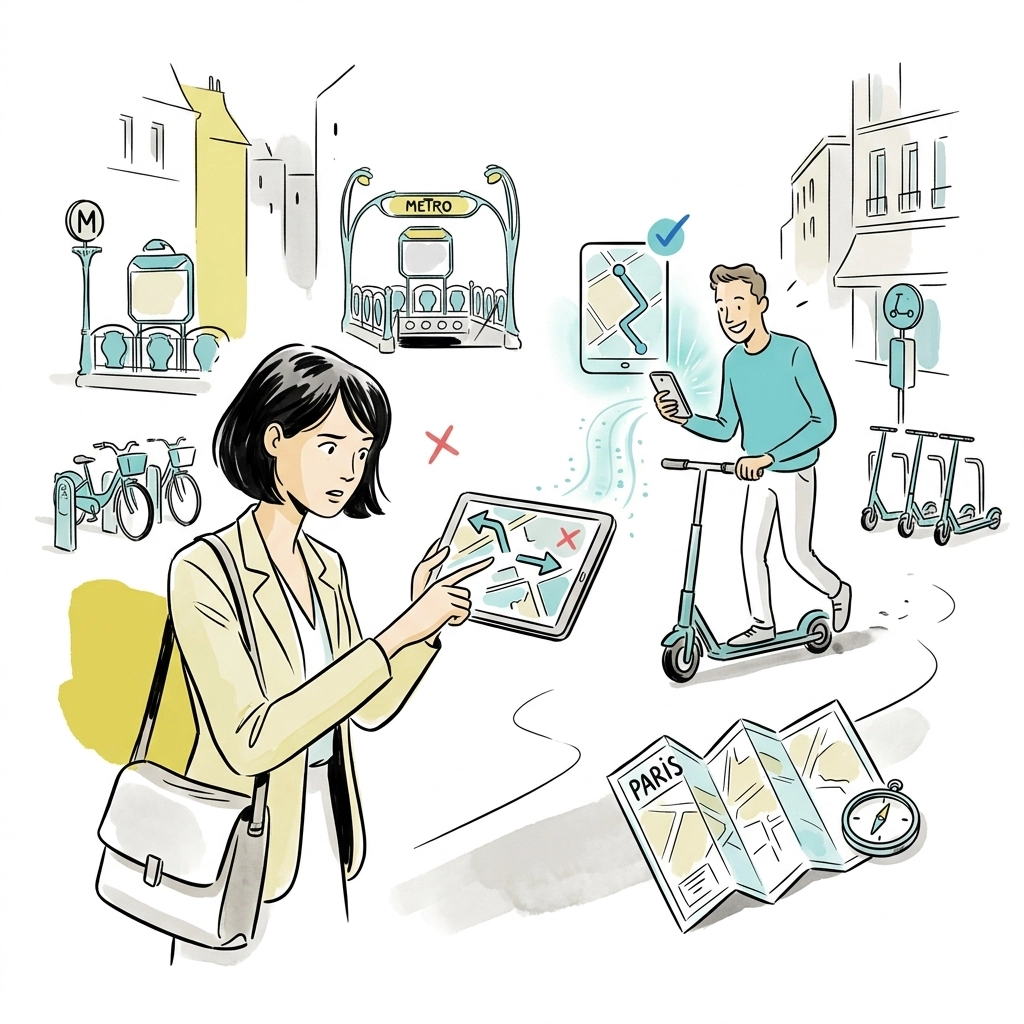
The French mobility market is one of the most dynamic in Europe. From the bustling streets of Paris to the sprawling suburban networks of Lyon and Marseille, the demand for "Mobility as a Service" (MaaS) has exploded. However, entering this market requires more than just a functional app and a fleet of vehicles. It requires a deep understanding of how French users interact with technology and their environment.
Many global brands fall into the trap of thinking that a standard translation of their interface is enough to win over the French public. In reality, mobility is a high-stakes sector where clarity, safety, and cultural relevance are paramount. When a user is trying to unlock a scooter in the rain or navigate a complex metro transfer, linguistic friction isn't just an annoyance; it is a reason to uninstall. Here are the seven most common mistakes brands make with French mobility localization and how you can fix them to ensure a smooth ride.
Treating French translation as a simple word swap
The biggest mistake is viewing localization as a secondary task that follows development. Many companies simply export their English strings, send them to a generalist translator, and import the French equivalents. This approach misses the linguistic nuance required for mobility. For instance, the English word "ride" could be translated as "trajet," "course," "balade," or "voyage" depending on whether the user is in a taxi, on a bicycle, or taking a long-distance train.
To fix this, you must move toward transcreation. This means involving French language services early in the process to understand the intent behind the microcopy. Instead of asking "What is the French word for this?", ask "How would a Parisian naturally describe this action?". In mobility apps, the goal is to reduce cognitive load. If the terminology doesn't match the user’s mental model of transport, they will hesitate, leading to a poor user experience and lower conversion rates.
Ignoring the physical expansion of French text
French is a notoriously "long" language. On average, a French sentence is 20% to 30% longer than its English counterpart. When localizing a mobility app, this becomes a major UI challenge. A "Book Now" button is short and punchy in English, but "Réserver maintenant" might break the layout, overlap with other elements, or be cut off entirely (the dreaded "Réser…"). This lack of visual polish signals to the user that the app wasn't built for them.
The solution is to design with flexibility in mind and involve your French content writing team during the design phase. Use "pseudo-localization" tools during development to see how longer strings will look in your layouts. If a term is too long, look for shorter synonyms that still maintain the professional tone. For example, "Valider" might work better than "Confirmer votre choix" in a tight space. Design should never be static; it must breathe with the language it carries.
Misjudging the formal and informal tone of voice
The French language has a built-in social hierarchy through the use of "tu" (informal) and "vous" (formal). Choosing the wrong one can alienate your audience. Many American-led mobility startups default to "tu" because they want to appear "disruptive" and friendly. However, in the context of transport: a service that involves safety, payments, and reliability: many French users expect the professional distance of "vous."
Fixing this requires a clear brand tone of voice document tailored for the French market. If your mobility service is a high-end chauffeur app, "vous" is mandatory. If you are a playful urban bike-sharing app targeting Gen Z, "tu" might be appropriate, but it must be used consistently. Mixing the two is the ultimate sign of poor localization. A professional marketing agency can help you strike the right balance between being approachable and being a reliable service provider.
Looking for an expert partner to help your brand navigate the French market? Explore our marketing services to see how we bridge the linguistic gap for global mobility leaders.
Overlooking specific French transport regulations
Mobility is one of the most regulated sectors in France. From the "Loi d’orientation des mobilités" (LOM) to strict GDPR requirements and consumer protection laws, the words you use in your Terms and Conditions or your privacy notices have legal weight. A direct translation of a US-based user agreement might not only be culturally jarring but could also be legally unenforceable in a French court.
To fix this, ensure your localization process includes a legal review by someone familiar with French transport law. This includes how you communicate about insurance, liability, and data usage. Furthermore, French users are highly sensitive to how their data is handled. Transparent, well-localized communication about data privacy can actually be a competitive advantage in France, building trust where global giants often fail.
Using generic terms for hyper-local transport modes
France has a specific vocabulary for its transport infrastructure that doesn't always translate globally. If your app refers to "the subway" in every city, you are missing a trick. In Paris, it’s the "Métro" or the "RER." In some cities, the "tramway" is the lifeblood of the centre, while in others, the focus is on "mobilités douces" (soft mobility) like e-scooters and bikes.
The fix here is to use local terminology that reflects the specific environment of the user. This level of detail shows that your brand understands the local culture. Consider these common terms and their nuances:
- Périphérique: Specifically refers to the ring road around Paris; calling it a "highway" or "autoroute" feels wrong to a local.
- Trottinettes: The standard term for e-scooters, which has its own set of specific "code de la route" (traffic laws) in France.
- Borne: Refers to a docking station or charging point, essential for electric vehicle (EV) apps.
- VTC: Stands for "Voiture de Transport avec Chauffeur," the specific legal category for services like Uber, distinct from "Taxis."
- Intermodalité: A key concept in French urban planning; your app should use this term when discussing switching between bikes, buses, and trains.
Failing to adapt payment and address formats
Nothing kills a conversion faster than a checkout process that feels foreign. French users have specific habits when it comes to payments and locations. While credit cards are common, the "Carte Bancaire" (CB) is the domestic standard. If your payment screen only talks about "Credit Cards" without mentioning "Cartes Bleues" or providing options like Lydia or Paylib (popular in France), you increase friction.
Address formatting is another common pitfall. In France, the house number usually comes before the street name (e.g., 10 Rue de la Paix), and the five-digit postcode is essential. If your address autocomplete or manual entry forms are hard-coded for Anglo-Saxon formats, French users will struggle. Fix this by using localized APIs for address validation and ensuring your payment gateway reflects French banking terminology. Small technical details are the foundation of a professional user experience.
Neglecting the clarity of real-time safety alerts
In the mobility sector, microcopy is often a matter of safety. When a navigation app tells a driver to "Turn left," or an e-scooter app warns a user about a "No-go zone," the French wording must be immediate and unambiguous. Many apps use automated translation for real-time alerts, leading to awkward or confusing phrasing that can cause hesitation in traffic.
The fix is to treat safety microcopy as your most important content. Ensure that alerts use imperative verbs (e.g., "Tournez," "Arrêtez," "Ralentissez") and that the information is front-loaded. A well-localized alert should be understandable in a split second. This is where human expertise in French localization is irreplaceable; an AI might get the grammar right, but a human understands the urgency and context of a driver on the "Place de la Concorde" at rush hour.
Navigating the future of French mobility
Successfully localising for the French mobility market is an ongoing process of refinement. It’s about moving beyond the dictionary and into the streets. By avoiding these seven mistakes, you position your brand as a local player rather than a foreign interloper. You build trust, ensure safety, and ultimately create a user experience that feels as natural as a walk along the Seine.
At Uncliched, we understand that mobility is more than just getting from point A to point B; it’s about the experience of the journey. Whether you are localising a SaaS platform for logistics or a consumer-facing ride-sharing app, our approach ensures your message is never lost in translation. The French market is ready for innovation: make sure your language is ready for the French market.