
The Ultimate Guide to French Game Localization: Everything You Need to Succeed
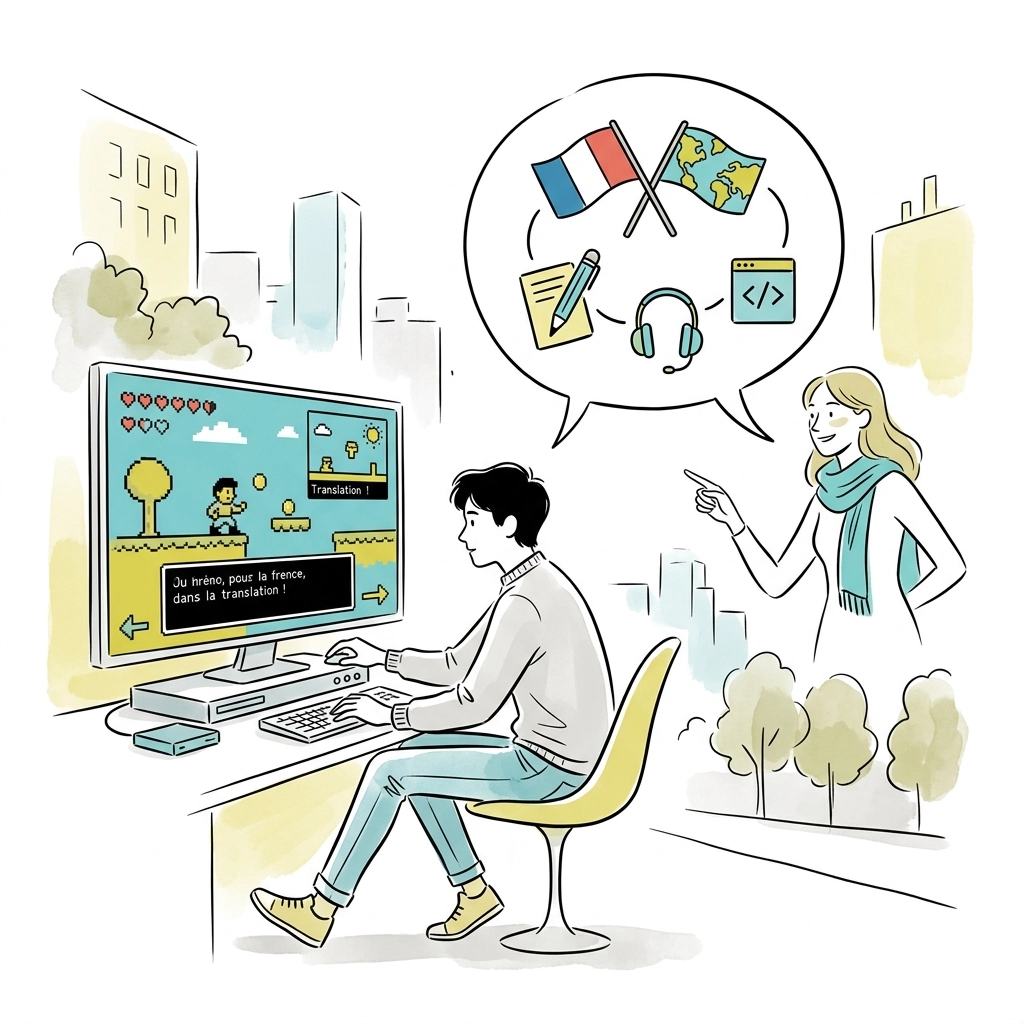
French is far more than just another language on a localization checklist. For game developers and publishers, it represents a gateway to one of the most sophisticated and demanding gaming audiences in the world. As the industry has matured, the expectations of French-speaking players have shifted dramatically. It is no longer enough to simply swap English strings for French ones; success in this market now requires a deep dive into cultural adaptation, linguistic nuance, and technical foresight.
The evolution of French game localization
The history of bringing games to the French market has moved through several distinct eras. In the early days, players were often content with manual translations or basic subtitles that felt like an afterthought. However, as gaming became a dominant cultural force in France, the standard for immersion rose. Today, we are seeing the rise of full cultural adaptation, where every element of the game: from the UI to the deepest lore: is reconsidered through a Gallic lens.
Modern French players view the quality of language as a direct reflection of the production value of the game. If the French text is clunky or the voice acting feels uninspired, it shatters the suspension of disbelief. This evolution means that localization teams are now involved much earlier in the development cycle, ensuring that the narrative weight and emotional beats of the original script are preserved rather than just translated.
Why literal translation fails modern players
A common mistake made by global marketing teams and developers is relying on literal translation. French is a descriptive, emotive language that often requires more words to convey the same meaning as English. When a translator sticks too closely to the source text, the result is often "Franglish": a hybrid that feels robotic and lacks the flair expected by native speakers.
Linguistic accuracy is only the baseline. To truly succeed, you must capture the "spirit" of the dialogue. For example, a joke that works in Seattle might fall completely flat in Lyon. Professional localization involves transcreation, where humor, idioms, and cultural references are reimagined to evoke the same emotional response in the target audience as they did in the original. High-quality localization acts as a bridge between the developer's intent and the player's cultural reality.
Managing the 30 percent text expansion rule
One of the most significant technical hurdles in French localization is the physical space the language occupies on the screen. On average, French text is 20% to 30% longer than its English equivalent. This expansion can wreak havoc on user interfaces, causing text to overflow buttons, bleed out of text boxes, or become unreadable due to excessive scaling.
Early planning is the only way to mitigate this. Developers need to build flexible UI systems that can accommodate varying string lengths without breaking the layout. This isn't just a design issue; it is a usability issue. A game that looks broken because the French words don't fit the buttons will be panned in reviews. Successful teams often use dynamic text scaling and scrollable containers to ensure the French version remains as polished as the original English build.
The nuance of formality and social cues
French grammar introduces a level of social complexity that English simply doesn't have, specifically regarding the choice between "tu" and "vous." Choosing the wrong level of formality can fundamentally change the relationship between characters or between the game and the player. Most modern games opt for the informal "tu" to create a sense of camaraderie, but this is not a universal rule.
A historical RPG or a high-stakes political thriller might require the formal "vous" to maintain the correct atmosphere. Consistency is the key here. Switching between the two without a narrative reason is a massive red flag to players that the localization was handled by someone without a deep understanding of the language. Maintaining grammatical consistency throughout thousands of lines of dialogue requires a rigorous linguistic QA process and a well-defined style guide.
If you are looking to expand your reach into new markets with expert linguistic support, explore how we help brands scale through our specialised marketing sectors.
Cultural adaptation beyond the written word
True localization extends into the realm of cultural cues and symbolism. What might be a harmless gesture or a common trope in one culture can be confusing or even offensive in another. In the French market, players appreciate when a game feels like it was "made for them." This includes everything from the way dates and measurements are formatted to the specific tone of the in-game tutorials.
Voice acting is another critical component where French players have exceptionally high standards. France has a long and proud history of dubbing in cinema, and this carries over to gaming. Players expect vocal performances that are emotive and professionally directed. A flat, monotone delivery will be mocked, while a resonant and culturally grounded performance can turn a good game into a cult classic in the French-speaking world.
Navigating regional variations in French
While France is the primary market, it is vital to remember that French is a global language. The French spoken in Quebec, Belgium, Switzerland, or parts of Africa has its own set of idioms, slang, and cultural touchpoints. For most "standard" localizations, Metropolitan French (FR-FR) is the default choice, but if your game has a significant audience in Canada, a specific FR-CA version might be necessary.
This is particularly important when it comes to slang and colloquialisms. Using Parisian street slang in a game targeted at a Montreal audience can feel jarring. Here is how you should approach these regional choices:
- Determine your primary revenue-generating French territory before starting.
- Use neutral, international French for UI and instructions to save on costs.
- Localize character dialogue specifically if the setting is tied to a certain region.
- Ensure that your linguistic QA team includes speakers from your target territories.
- Adapt the marketing metadata: like App Store descriptions: to match local search intent.
By acknowledging these differences, you show respect for the diversity of the Francophone world, which builds brand loyalty among international players.
The business case for high-quality localization
From a marketing agency perspective, the ROI of professional localization is clear. France consistently ranks as one of the top ten gaming markets globally by revenue. When you provide a seamless French experience, you aren't just translating words; you are removing friction from the purchasing process. A player who can understand every instruction, feel every emotional beat, and navigate every menu without confusion is a player who is likely to recommend the game to others.
Furthermore, localization directly impacts your visibility on digital storefronts. French keywords have different search volumes and competition levels than English ones. A localized title, description, and set of keywords can significantly boost your organic reach in the French-speaking corners of the internet. Investing in expert French content writing for your store pages is just as important as the in-game text itself.
Implementing an effective localization workflow
To succeed, you need a workflow that prioritises context. Providing translators with a list of strings in an Excel sheet without context is a recipe for disaster. Translators need to know who is speaking, what the environment looks like, and what the ultimate goal of the dialogue is. They need to see the UI to understand space constraints.
The best results come from a collaborative process where the localization team acts as an extension of the development team. This involves regular linguistic testing where the translators actually play the game to see their work in action. This allows them to catch errors that are invisible in a spreadsheet, such as gender agreement issues that only appear when two specific strings are combined. A context-driven workflow ensures a polished final product that resonates with the most discerning French gamers. High-quality French localization is not a cost; it is an investment in your game’s global legacy.